
ABOUT MBMCX
General information
The master’s program lasts one academic year (one year) with 60 credits distributed across two semesters and can be completed in on-site or blended learning mode.
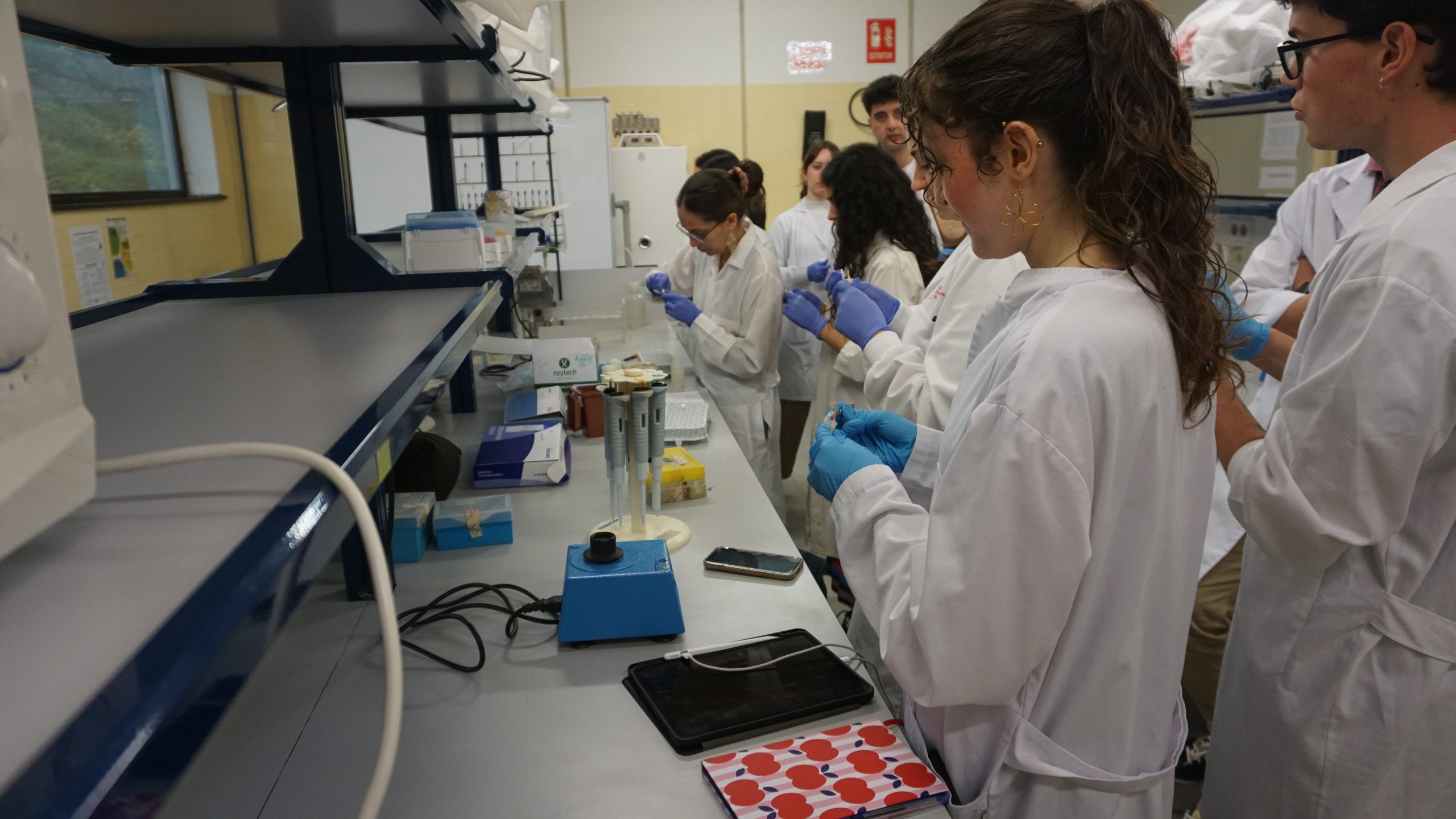
During the first semester, compulsory subjects with substantial practical content are taught: Molecular Techniques, Cellular Techniques, and four subjects on Advances in Molecular, Cellular, and Genetic Biology.
During the second semester, students complete a 12-credit Master’s Thesis, a compulsory 3-credit subject on Entrepreneurship and Self-Employment to prepare for the job market, and 15 elective subjects that include External Internships so that the curricular orientation best suits your interests.
Academic profile
Entry profile
The master’s program is primarily aimed at graduates in the fields of Biology and genetics, Biochemistry and biotechnology, and Biomedical sciences, but also welcomes graduates in the fields of Agricultural sciences, Environmental sciences and ecology, Pharmacy, Medicine and dentistry, and Veterinary science.
This master’s programme is of interest for the continuing education of healthcare professionals and those in R R technicians and technologists in companies; and upper-secondary school teachers.
Competencies
You will be able to analyze, synthesize, make decisions, and manage biological problems related to Molecular, Cellular, and Genetic Biology. Additionally, you will learn to organize yourself, make decisions, and work in a team.
Specific skills
- CE01 Ability to use common techniques and instruments in cellular and molecular biological research: to be able to handle the techniques and protocols as well as to understand their potential, uses and applications.
- CE02 Ability to work safely in laboratories knowing the operations manuals and actions in the event of risk incidents.
- CE03 Ability to understand cell functioning through its structural organization, biochemical signaling, gene expression and genetic variability.
- CE04 Ability to know and analyse specific cellular systems such as stem cells, neurons, immune system cells, or other cells related to various pathologies.
- CE05 Ability to have an integrated vision of the knowledge previously acquired in relation to Molecular, Cellular and Genetic Biology, with an interdisciplinary approach and a very high degree of experimentation.
- CE06 Ability to understand the structure and function of proteins at the individual and proteomics level, as well as the techniques necessary to analyse them and study their interactions with other biomolecules.
- CE07 Ability to modify genes, proteins and chromosomes with biotechnological applications.
- CE08 Ability to understand the structure, function and evolution of genomes and apply the necessary tools for their study.
- CE09 Ability to understand, detect and analyse genetic variation, to know the genotoxicity processes and methodologies for their evaluation, as well as to carry out diagnostic and genetic risk studies.
- CE10 Ability to apply molecular techniques to the study of the plant cell and its physiology, its response to external stimuli and its biotechnological applications.
- CE11 Ability to use bioinformatics tools at the user level.
- CE12 Ability to understand the role of microorganisms as pathogens and as biotechnological tools.
- CE13 Ability to integrate professionally into services in the health, pharmaceutical, veterinary, animal production, biotechnology or food sector industries.
Career opportunities
Some of the career opportunities you can access through this master’s program are as follows:
- Biomedical and Health Research
- Biotechnology and Pharmaceutical Industry
- Genetic Analysis
- Academic Research and Development (R)
- Entrepreneurship and Management
Modes
The master’s programme has two modes: on-campus and blended (hybrid). In both cases, there is a strong emphasis on developing on-campus laboratory practicals.
In the blended mode, compulsory subjects are concentrated into a three-to-four-week period in November and December. In the second semester, electives are offered with on-campus and online practicals so that students can tailor their electives to their interests and specific needs.
Admission requirements for Blended learning mode
The master’s program offers 10 places in this mode. To access it, you must meet at least one of these requirements:
- Be registered at more than 80 km from the city of A Coruña
- Full-time paid employment
Excellence awards
The master’s program annually offers awards for the best academic records for admission to the master’s program. One for talent retention and four for talent attraction. The latter for students from Galicia, from the EHEA, and for students from outside the EHEA.
Scholarships
Both UDC and other institutions offer study grants. Additionally, there are other financial aids for completing external internships.
Complete pre-registration
For admission in blended learning mode, it will be a sine qua non condition to submit, at the time of pre-registration, proof of registration or employment history as applicable.